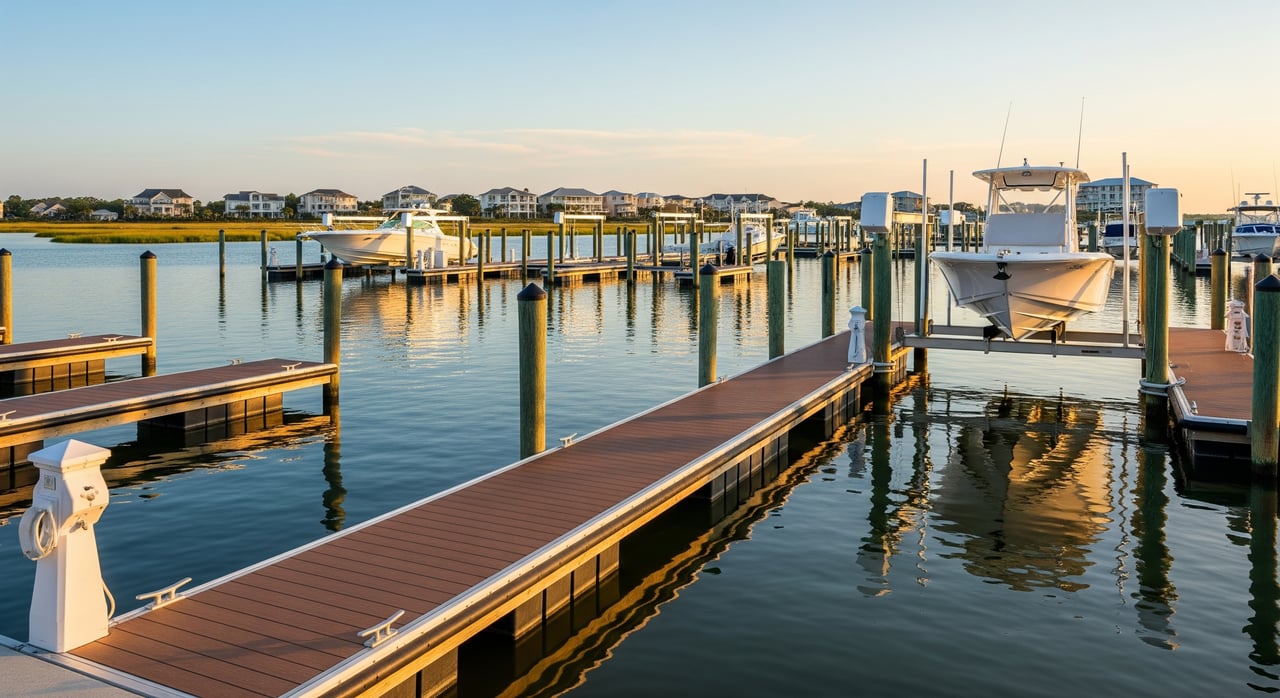
Understanding Boat Slip Types in Ocean Pines Communities
January 15, 2026
January 15, 2026
Shopping or selling in Ocean Pines and plan to keep a boat on the water? The type of slip that comes with a home can make or break your shore lifestyle. You want a spot that fits your vessel, is available when you need it, and holds its value. This guide breaks down slip types in Ocean Pines, how to size a slip to your boat, key documents to request, and who to contact to verify details. Let’s dive in.
A deeded slip is recorded in the property deed or as its own real-property parcel. Ownership of the slip transfers with the deed and can be conveyed or mortgaged. This is usually the strongest property right.
For buyers, a deeded slip can add value, but it may carry its own tax, insurance, or association obligations. Verify the recorded legal description, any shared easements, and maintenance duties. Always confirm deed language and plats through Worcester County land records during escrow.
An assigned slip is allocated by the community or HOA for your use, but it is not real property. The right comes from the association’s rules and contract, not from a deed. Assignments may be seasonal or annual and can change with policy or when a home sells.
Ask for the written assignment policy, the term length, and whether assignments are transferable to a buyer. Also review waitlist rules, priority, and what happens if fees are delinquent. Your access depends on current association policies.
Rental slips are available on a daily, monthly, or seasonal basis for residents or the public. They are flexible, but long-term availability is not guaranteed.
Request the fee schedule, reservation rules, and seasonal availability. Confirm guest and overnight policies before you rely on a rental slip for a larger boat or peak season.
The Ocean Pines Association manages marinas and boating amenities within the community. You will commonly see a mix of assigned slips, some deeded slips tied to certain lots, and rentable or transient options.
Ocean Pines fronts Isle of Wight Bay, with tidal patterns and shoaling that affect approach depths. Check with the association’s marina office for current policies, slip maps, waitlist procedures, fee schedules, and any dredging updates. For navigation and depth planning, consult NOAA charts and tide tables, along with Maryland DNR boating resources.
Match the slip to your boat’s LOA and beam. Allow extra length beyond your boat’s LOA, typically 2 to 3 feet total. Aim for 1 to 2 feet of side clearance on each side for fenders and boarding. Larger vessels may need more room, especially in tight fairways.
Your boat’s draft must be less than the water depth at the slip during the lowest predictable tide. Leave a safety margin of at least 1 to 2 feet below the keel. Confirm mean low water depths, and factor in seasonal shoaling. When in doubt, ask for recent depth surveys or dredging history from the marina.
Consider fairway width, turning room, and prevailing wind and current. A slip can match your LOA and beam, but still be hard to access if the approach is tight. When possible, perform a test docking at typical low tide with normal winds.
Floating docks rise and fall with the tide, which can simplify boarding. Fixed docks feel stable but can affect access at very high or very low water. Verify which type serves the slip you are considering.
If a lift is present, confirm weight limits, beam clearance, and cradle fit. Ask whether owner-installed lifts are allowed and whether permits are required. Check policies for davits and any restrictions on vessel type or use.
Look for shore power, water, lighting, and security provisions. Confirm voltage and amperage. Find out where pump-out and fuel are available nearby. Review insurance requirements for liability and hull coverage.
Ask whether boats may remain in slips or on lifts in winter. Review storm plans, ice conditions, and how the association handles emergency repairs. Understanding these policies helps protect your boat and your budget.
When your boating plans and home purchase align, everything about shore living gets easier. If you want a property that truly fits your vessel and lifestyle in Ocean Pines, we can help you evaluate slip status, fit, access, and value. Start a conversation with the team at Shore4U Real Estate.
September 17, 2026
September 3, 2026
August 20, 2026
August 6, 2026
July 23, 2026
July 16, 2026
Ready to buy, sell, or invest in real estate? Reach out to Shore4U Real Estate today to start a conversation. They are here to help.